
MarMonix MVS 700 Series Industrial Videoscope: Buyer’s Guide
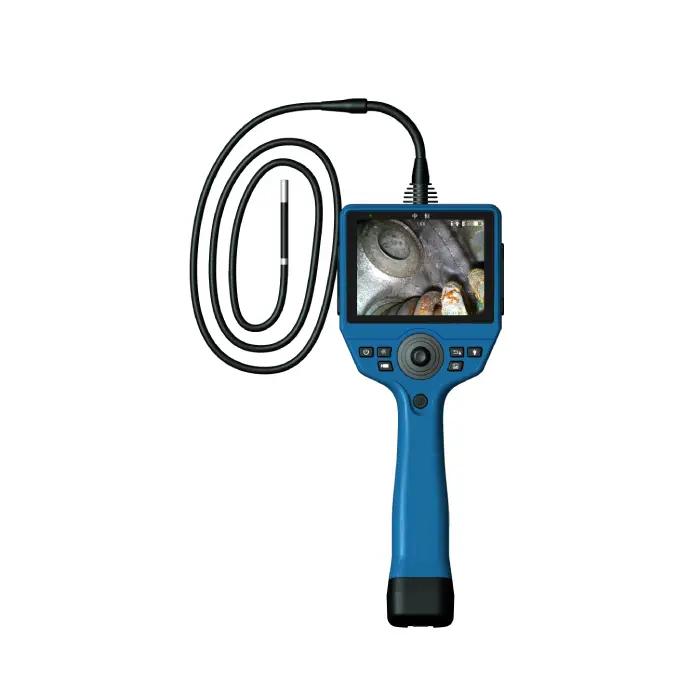
The MarMonix MVS 700 Series is an advanced industrial videoscope built for professionals who inspect the places no one can reach. With a 5.1″ HD touchscreen, an exceptionally bright 60,000 lux LED, built-in Wi-Fi, and IP67 waterproof interchangeable probes, it is engineered to deliver clear, well-lit images in dark, wet, and demanding environments. This guide explains what the MVS 700 Series does best, who it is for, and how to get reliable inspection results.
To compare it with other models, read our video borescope buyer’s guide and browse the video borescopes category. For the current specification and price, visit the MVS 700 Series product page.
What the MVS 700 Series Is
The MVS 700 Series is a premium handheld videoscope system that pairs a high-resolution touchscreen host with a range of interchangeable probes. It is designed for serious, repeatable inspection — the kind of work where image clarity, illumination, and durability directly affect whether you find the fault.
Who it is for
It suits aviation and turbine MRO, manufacturing QC, automotive specialists, and industrial maintenance teams who need to inspect engines, castings, welds, gearboxes, and pipework with confidence — and to document what they find.
Key Features and What They Mean
5.1″ HD touchscreen
A large, high-resolution touchscreen makes navigation intuitive and lets you see fine detail clearly in the field. A bigger, sharper screen is not a luxury — it is how you actually spot a hairline crack or early corrosion.
60,000 lux LED illumination
Light is everything inside a dark cavity. The MVS 700’s powerful 60,000 lux LED floods confined spaces with even illumination, so defects hidden in shadow become visible — one of the most important and most overlooked factors in borescope inspection.
Built-in Wi-Fi
Integrated Wi-Fi lets you share images and video wirelessly for reporting and collaboration, keeping your inspection records organised as you work.
IP67 waterproof, interchangeable probes
IP67-rated probes withstand harsh, wet environments, while the interchangeable probe system lets one host cover many jobs — swap diameters and lengths to match the access point and reach you need. This adaptability is what makes the MVS 700 a long-term investment rather than a single-task tool.
Typical Applications
Aviation, turbine, and MRO
Inspect blades, combustion chambers, and hard-to-reach assemblies without dismantling — the classic high-value application where image quality and articulation matter most.
Manufacturing and quality control
Check welds, castings, bores, and internal threads for defects as part of a documented QC process.
Automotive and heavy machinery
Examine cylinders, valves, and gearboxes through small ports, saving hours of teardown.
Where It Fits in the MarMonix Range
The MVS 700 Series is the premium handheld choice for demanding professional inspection. For an ultra-slim, modular alternative, see the MVS 600 Series; for long pipe and drain runs, the MDCS Pipe Inspection System and MDCS Dual-View systems are purpose-built. Match probe diameter, reach, and illumination to your inspection first.
How to Get Good Inspection Results
Clean the access port, feed the probe gently to avoid kinking, and — crucially — adjust the powerful LED before deciding an area is clear, because many defects hide in shadow. Capture stills and video of anything notable, and note the orientation so the image makes sense later. Never force a probe around a tight bend; back off and find a better entry.
Documenting findings
Use the touchscreen and Wi-Fi to capture and share evidence on the spot. A recorded, annotated finding is far more useful than a verbal report when a decision or a warranty claim depends on it.
Strengths, Limitations, and Value
Strengths
The MVS 700’s strengths are its bright illumination, sharp HD touchscreen, rugged waterproof probes, and probe interchangeability — a combination built for clear results in tough conditions. It is a tool you can rely on job after job.
Limitations
For very long pipe or drainage runs, a push-rod pipe system is the right tool rather than a handheld videoscope. Choose the system that matches the geometry of your inspection.
Total value
Because one host serves many probes and survives harsh environments, the MVS 700 Series delivers a strong return over its working life — especially where avoided teardowns and documented findings save real time and money.
Choosing the Right Probe Configuration
Because the MVS 700 host accepts interchangeable probes, the most important buying decision is matching probes to the work you actually do.
Probe diameter
The probe must fit through the access port, so measure your smallest realistic entry point first. A slimmer probe reaches more places, while a larger one usually carries a brighter light and a better camera. Define the access dimension before anything else.
Probe length
Length must reach the target with margin. Too short and you cannot get there; unnecessarily long and the probe becomes harder to control in tight spaces. Choosing the right reach for each task keeps inspection fast and precise.
Articulation and viewing
For inspecting specific features — turbine blades, cylinder walls, complex castings — a steerable, articulating tip lets you aim at the defect rather than hoping it drifts into view. Articulation is what separates a capable industrial videoscope from a simple look-down camera, and it is worth specifying for high-value inspection.
Frequently Asked Questions
Why does illumination matter so much?
Inside a dark cavity, defects hide in shadow. The MVS 700’s 60,000 lux LED ensures even, bright light so you actually see cracks, corrosion, and wear.
Can I use different probes with one host?
Yes. The interchangeable probe system lets a single host cover many diameters and lengths, so one investment handles many jobs.
Is it suitable for wet environments?
The IP67-rated probes are built for harsh, wet conditions. Always confirm the rating and any immersion limits before submerging the probe.
Can I share inspection footage?
Yes — built-in Wi-Fi lets you transfer images and video for reporting and collaboration.
Related Guides and Models
Compare every option in our video borescopes buyer’s guide, see the thermal imaging cameras guide for surface inspection, or browse the full video borescopes category.