
MarMonix MTV 256 PRO Thermal Camera: Review & Buyer’s Guide
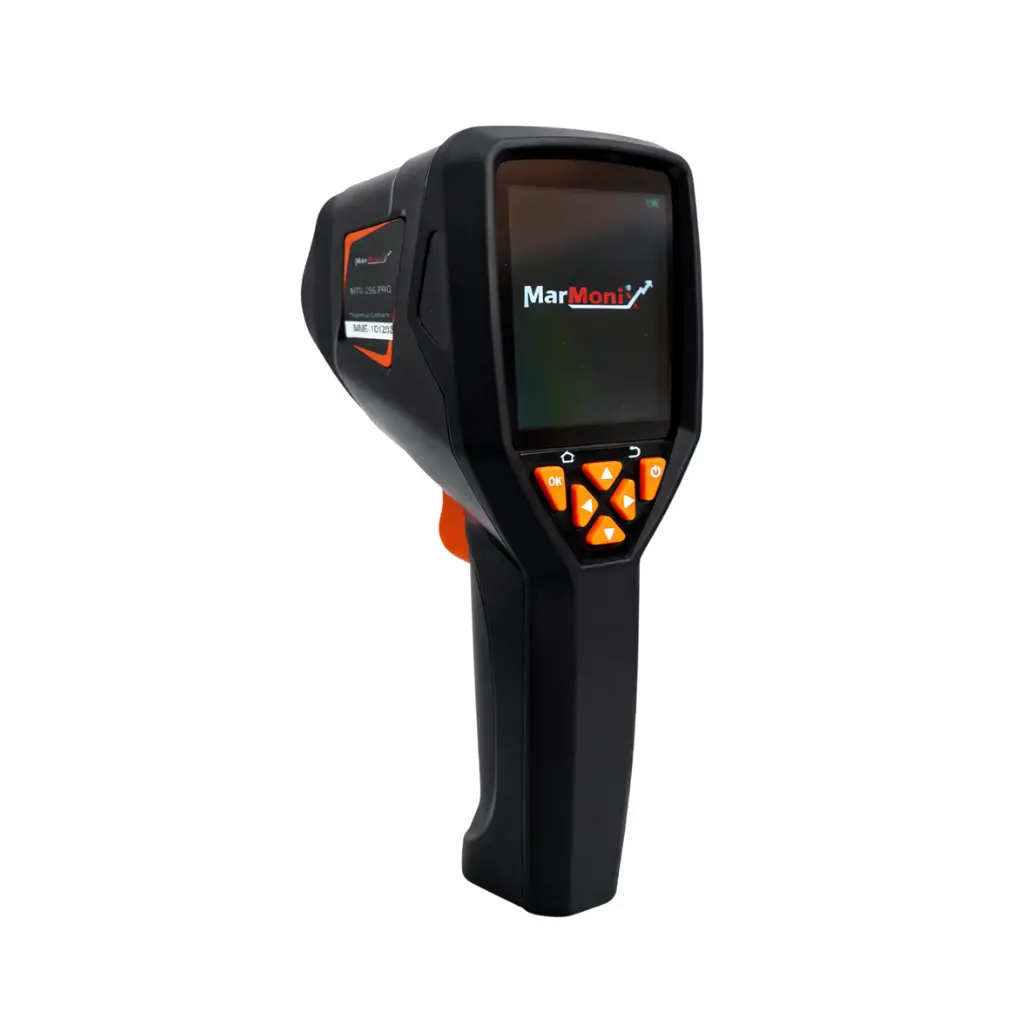
The MarMonix MTV 256 PRO is a handheld thermal imaging camera built for technicians who need dependable, accurate temperature readings without the price tag of a high-end imager. With a 192×256 infrared detector, a 720P visual camera, and a measurement range of -20°C to 400°C, it covers the vast majority of electrical, mechanical, and building inspection work. This guide explains what the MTV 256 PRO does best, who it is for, and how to get accurate results from it in the field.
If you are weighing it against other models, see our full thermal imaging camera buyer’s guide or browse the complete thermal cameras category. To check the latest specification and price, visit the MTV 256 PRO product page.
What the MTV 256 PRO Is
The MTV 256 PRO is a point-and-shoot handheld thermal camera that turns invisible heat into a clear, colour-mapped image. It is designed as an everyday workhorse — rugged enough for site use, simple enough to hand to any technician, and accurate enough to support real maintenance decisions.
Who it is for
It suits electricians scanning panels and connections, HVAC and mechanical technicians checking motors and bearings, and building professionals looking for insulation gaps, damp, or missing heating. If your work rarely exceeds 400 °C and you value speed and value over laboratory-grade resolution, this is the right tier.
Key Specifications and What They Mean
Detector resolution: 192×256
The infrared detector captures genuine thermal detail across the scene, letting you isolate a single warm terminal in a crowded board. Native detector resolution is what determines real image quality — not the on-screen image size — so a true 192×256 sensor delivers reliable, repeatable results.
Visual camera: 720P
A built-in 720P visible-light camera lets you pair a normal photo with the thermal image, so you can instantly identify which component is running hot when you review or report a fault.
Temperature range: -20°C to 400°C (±2°C)
The range fits the work. Building and electrical inspections rarely exceed 150 °C, while overloaded connections and mechanical faults stay comfortably within 400 °C. A typical accuracy of ±2 °C is well inside what maintenance decisions require.
Storage and battery
With 8 GB of internal memory holding around 20,000 images or video files and a 2600 mAh battery good for roughly four hours of continuous use, the MTV 256 PRO comfortably covers a full inspection round without stopping to offload data or swap power.
Typical Applications
Electrical inspection
Scan distribution boards, breakers, busbars, and terminations under load to find loose or corroded connections before they fail. A warm phase next to two cool ones is an immediate, visible warning.
Mechanical and HVAC maintenance
Check motors, bearings, pumps, and belts for abnormal heat, and verify that heating and cooling systems are performing evenly across a space.
Building and energy surveys
Reveal missing insulation, air leakage, and moisture through the subtle temperature patterns they leave on walls, ceilings, and floors.
Where It Fits in the MarMonix Range
The MTV 256 PRO sits in the practical professional tier. If you need higher resolution for more demanding inspection, step up to the HTV 340 LPRO; if you want Wi-Fi and PC reporting software, look at the MTV-320 Pro; and for a phone-based, ultra-portable option, see the MTV-ONE PRO. Choose resolution and reporting features first, then form factor.
How to Get Accurate Results
Let the camera acclimatise to ambient temperature, set the correct emissivity for the surface, and avoid measuring shiny metal head-on — it reflects surrounding heat and reads low. Inspect electrical equipment under normal load, keep the target in sharp focus, and record the ambient conditions, because a component’s temperature only means something in context.
A quick field workflow
Scan broadly first to spot anomalies, then move closer to confirm the hottest point, capture both a thermal and a visual image, and note the load and location. This simple routine turns a quick scan into a defensible record.
Strengths, Limitations, and Value
Knowing where a camera shines — and where it does not — is the key to buying the right tool rather than the most expensive one.
Strengths
The MTV 256 PRO’s biggest strengths are its balance of detector resolution, range, and price, its generous storage that rarely needs offloading mid-job, and a dual thermal-plus-visual workflow that makes faults easy to document. For day-to-day fault finding, it does almost everything a far costlier imager does.
Limitations
Its 400 °C ceiling rules it out of furnace and foundry work, and very subtle building-envelope surveys benefit from the higher sensitivity of a flagship model. These are deliberate trade-offs that keep the camera affordable for the work it is designed to do.
Total value
Because it captures genuine native-resolution thermal images, stores thousands of them, and runs for hours on a charge, the MTV 256 PRO delivers a low cost per inspection over its working life. For most electrical, mechanical, and building technicians, it is the model that pays for itself the first time it catches a fault before failure.
Frequently Asked Questions
Is the MTV 256 PRO good for electrical work?
Yes. Its 192×256 detector and 400 °C range cover panel, connection, and load inspection, and the visual camera helps you pinpoint exactly which component is hot.
Can it measure high-temperature furnaces?
Its range tops out at 400 °C, which suits electrical, mechanical, and building work. For furnace or foundry temperatures you would need a higher-range imager.
How long does the battery last?
The 2600 mAh battery delivers roughly four hours of continuous use, enough for a typical inspection round.
Why do my metal readings look wrong?
Shiny metal has low emissivity and reflects surrounding heat. Apply high-emissivity tape, or measure a non-reflective part of the assembly.
Does it capture both thermal and normal photos?
Yes. The built-in 720P visual camera lets you pair a standard photo with the thermal image, which makes it much easier to identify exactly which component is running hot when you review or report a finding later.
Related Guides and Models
Compare the full range in our thermal imaging cameras buyer’s guide, explore the video borescopes guide for internal inspection, or browse every model in the thermal cameras category.