
Description
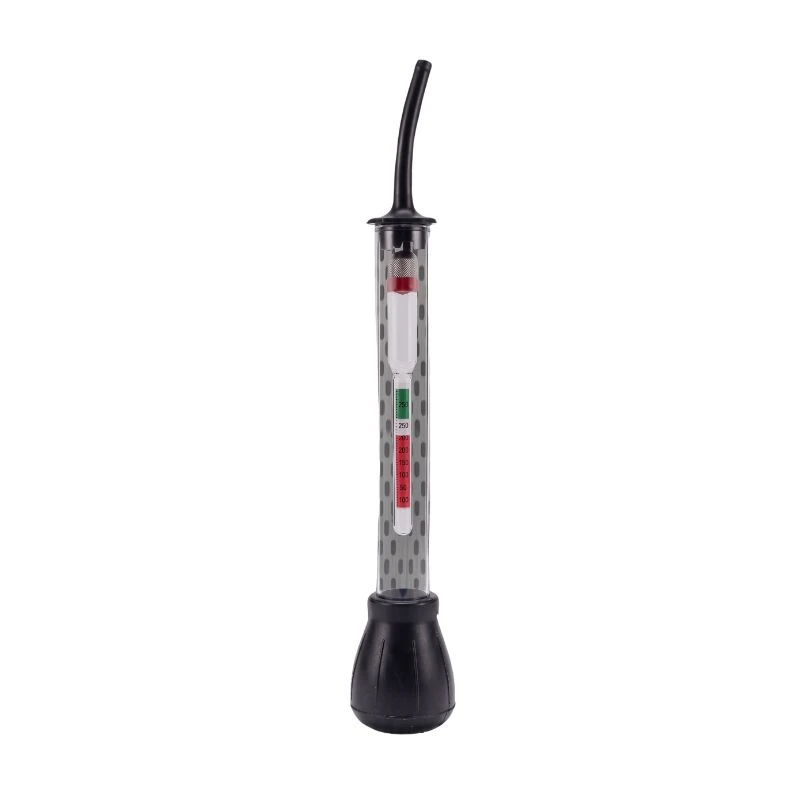
The Marmonix MBH-100 battery hydrometer (also written MBH100 or MBH 100) measures the specific gravity of lead-acid battery electrolyte from 1.100 to 1.300 SG, read directly off a float in 0.005 SG steps. You squeeze the rubber bulb, draw electrolyte up the flexible PVC tube into the clear acid-resistant body, and read the scale where the float meets the liquid. No batteries or power supply are needed. It is about 290 mm long, weighs about 120 g, and is meant for flooded cells, used between 0 and +50 °C (part number 7603901). It is part of the Marmonix battery testers range, and the electrical test instruments guide covers the meters used alongside it.
Marmonix MBH100 Digital Battery Electrolyte Tester
The Marmonix MBH100 is a digital battery hydrometer for checking electrolyte density and supporting lead-acid battery maintenance. A density reading can give technicians useful information about battery condition when it is taken with the correct procedure and interpreted alongside the battery maker’s guidance. Digital presentation helps make routine checks easier to record and compare across a group of batteries.
Use the MBH100 as part of a controlled inspection routine. Prepare the battery and work area safely, follow the instructions for sampling and measurement, and use appropriate protective equipment when working around electrolyte. Keep the instrument clean, avoid contamination between cells, and document the battery identifier, test date, and observed result for future comparison.
Typical application
For example, a fleet technician can use the MBH100 during scheduled service checks to compare electrolyte density across lead-acid batteries and flag units that need further investigation.
The MBH100 supports maintenance decisions but does not replace a complete battery test or charging-system assessment. Consider temperature, battery type, state of charge, and the manufacturer’s recommended procedure when reviewing readings. Rinse or care for the instrument only as directed and store it protected between uses.
See related products in our battery testers category. The category provides a starting point for selecting instruments for battery inspection and electrical maintenance.
Consistent records help teams identify trends before a battery affects service availability. Train users on safe handling and keep the work area ventilated and organized according to site requirements.
Case study: tracking down a weak cell in a flooded battery bank
A standby battery bank keeps passing its voltage checks, yet runtime on the last outage was shorter than expected. Voltage on a string can hide one tired cell, so the technician checks electrolyte density cell by cell.
A sound hydrometer routine looks like this:
- Test after charging, not after topping up: water added just before testing dilutes the acid near the top and gives a false low reading.
- Rinse the hydrometer with the cell’s own electrolyte: fill and empty it a couple of times so the sample is not diluted by the previous one.
- Read at eye level with the float free: keep the body upright and draw enough liquid that the float does not touch the walls or the top.
- Return every sample to the cell it came from and note the cell number, the reading and the electrolyte temperature.
The useful result is the spread. Cells that read close to each other point to a healthy bank; one cell well below its neighbours, still low after a full charge, is the one to investigate. Readings are compared against the battery maker’s values with their temperature correction, and acid-resistant gloves and eye protection are worn throughout.
MBH-100 hydrometer: quick answers
Does the MBH-100 need batteries?
No. It is a float hydrometer: the specific gravity is read on the float scale, so no external power is required.
Can the MBH-100 test AGM or gel batteries?
No. It is designed for flooded lead-acid batteries, where electrolyte can be drawn from each cell. Sealed AGM and gel batteries do not allow sampling.
How precise is the MBH-100 scale?
The scale reads 1.100 to 1.300 SG with 0.005 SG graduations, which is fine enough to compare cells in the same battery.
Downloads
Downloads


Specifications
Specifications
| Specification | Details |
|---|---|
| Product | MarMonix MBH100 Battery Hydrometer |
| Part Number | 7603901 |
| Measurement | Specific Gravity (SG) |
| Measuring Range | 1.100 to 1.300 SG |
| Graduation | 0.005 SG |
| Reading Method | Direct Float Reading |
| Body Material | Transparent Acid-Resistant Plastic |
| Float Material | Precision Plastic Float |
| Bulb Material | Chemical-Resistant Rubber |
| Tube Material | Flexible PVC |
| Overall Length | Approx. 290 mm |
| Weight | Approx. 120 g |
| Operating Temperature | 0°C to +50°C |
| Storage Temperature | -20°C to +60°C |
| Package Contents | 1 x MBH-100 (main unit), 1 x User Manual |
Reviews (0)


Reviews
There are no reviews yet.